The CV Rules Have Changed — Are You Keeping Up?
The job market in 2026 looks nothing like it did five years ago. Recruiters are busier than ever, and AI-powered applicant tracking systems (ATS) now screen CVs before a human ever reads them. If your resume is missing the right keywords, you could be filtered out before a recruiter even sees your name.
The good news? A few targeted updates can dramatically improve your chances of landing an interview. Here are five practical strategies to make your CV and LinkedIn profile work harder for you.
1. Add AI Tool Proficiency to Your CV — Right Now
This is the single most overlooked keyword category in 2026.
If you use tools like ChatGPT, Claude, Microsoft Copilot, DeepSeek, Gemini, or any other AI platform in your daily work — put it on your CV. Explicitly. Recruiters and hiring managers are actively searching for candidates with AI literacy, and ATS systems are scanning for these exact terms.
Why this matters: Employers across every industry — from finance and healthcare to logistics and FMCG — want professionals who can use AI to boost productivity, improve communication, and solve problems faster. Showing that you are already doing this positions you ahead of candidates who are not.
How to add it:
- Create a “Tools & Technology” section on your CV
- List specific AI platforms you use regularly
- Briefly explain how you use them (e.g., “Used ChatGPT to draft client communications and research market trends”)
2. Study Top Profiles in Your Industry to Find the Right Keywords
Before you rewrite your CV, spend 30 minutes doing competitive research on LinkedIn.
Search for professionals in your target role who are actively getting hired or promoted. Look at how they describe their experience, which certifications they list, and what technical skills appear repeatedly. This is not about copying anyone — it is about understanding the language your industry currently uses.
What to look for:
- Job titles and role variations (e.g., “Digital Marketing Manager” vs. “Growth Marketing Lead”)
- Hard skills and software tools mentioned in multiple profiles
- Certifications that appear frequently (Google Analytics, PMP, AWS, etc.)
- Action verbs used to describe achievements
This research will reveal keyword gaps in your own profile that you can fix immediately.
3. Align Your CV Keywords With What Companies Are Investing In
A common mistake job seekers make: updating their CV without researching where the industry is actually heading.
If you want to work in FMCG, technology, logistics, or healthcare, visit the websites of your target companies. Read their latest press releases, annual reports, and job postings. Notice the language they use. If a company is investing in sustainability, automation, digital transformation, or AI integration, and you have relevant experience, use those exact phrases on your CV.
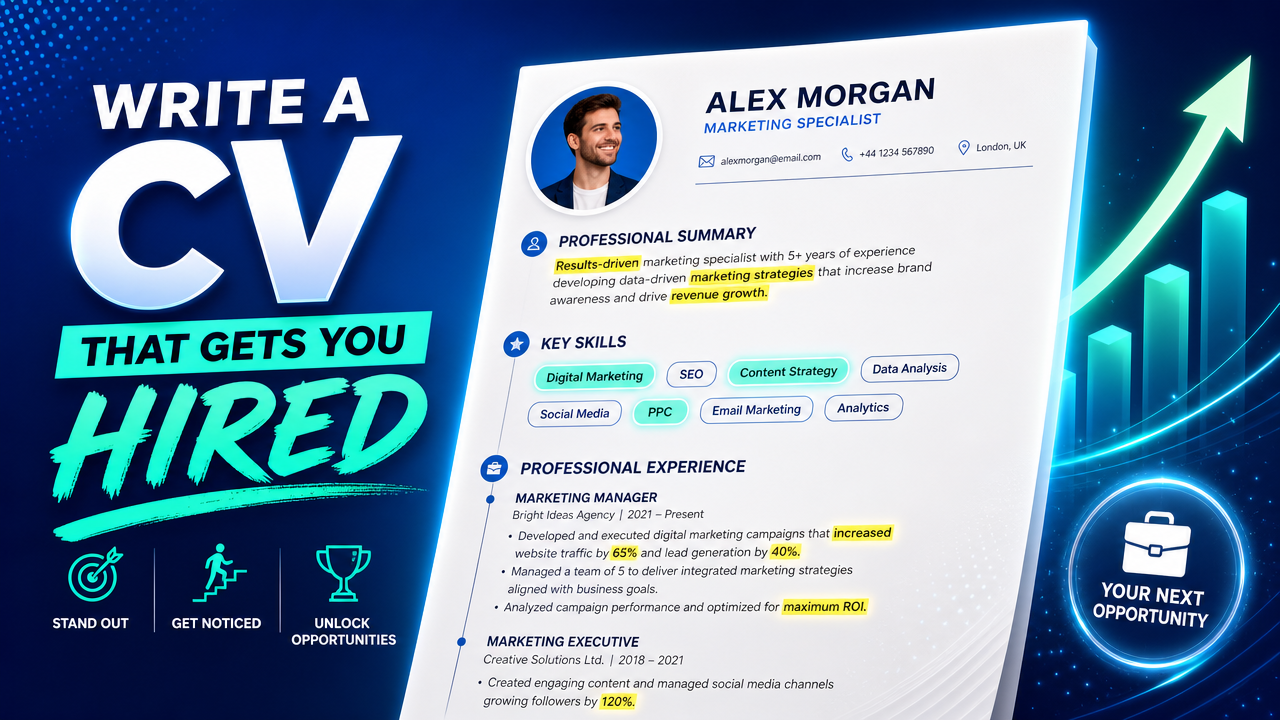
Practical tip: Take three job descriptions for your target role, paste them into a document, and highlight every skill and keyword that appears more than once. These are your priority keywords. Make sure each one appears somewhere in your CV — naturally and honestly.
4. Get a Human Review Before You Submit
Spell-check is not enough. You need a real person who understands your industry to review your CV before it goes out.
Ask a trusted colleague, mentor, or recruiter contact to give you honest, specific feedback. Tell them: “Don’t just tell me it looks good — tell me what’s missing.” A skilled reviewer will spot vague language, missing achievements, and formatting issues that you have become blind to after staring at the same document for too long.
If you do not have a recruiter in your network, consider reaching out to specialist recruitment firms in your sector. Many offer a free initial consultation and can tell you exactly what employers in your field are currently looking for.
Key questions to ask your reviewer:
- Does the CV clearly show the value I bring in the first 10 seconds?
- Are my achievements quantified wherever possible?
- Is there anything here that might confuse an ATS system?
5. Use AI to Audit Your Own CV Before Anyone Else Sees It
Here is perhaps the most powerful tip on this list — and the one most candidates are not yet using.
AI tools can now give you a detailed, honest critique of your CV in under two minutes. Before you submit your next application, try uploading your CV to ChatGPT, Claude, or a similar tool and asking:
- “What keywords are missing from this CV for a [your target job title] role?”
- “What are the three biggest weaknesses in this resume?”
- “How would an ATS system score this CV for a role in [industry]?”
- “What achievements should I be quantifying that I haven’t?”
The responses will often surface blind spots that even experienced reviewers miss. Use the feedback to refine your CV, then ask again. Treat it as a feedback loop, not a one-time check.
Important: Use AI to improve your CV — not to write it entirely from scratch. Recruiters are increasingly skilled at identifying AI-generated content that lacks a genuine human voice. Your CV should still sound like you.
The Bottom Line: Small Updates, Big Results
The professionals getting hired right now are not necessarily the most qualified. They are the ones who understand how modern recruitment works — and they have optimized their CVs accordingly.
Whether your application is screened by an algorithm, reviewed by a recruiter, or assessed by both, the same principle applies: make it easy for the reader to immediately understand the value you bring.
Start with these five steps today. Audit your AI tool proficiency, research your industry keywords, align with company priorities, get a second opinion, and run your CV through an AI review before you submit.
Your next opportunity is out there. Make sure your CV is ready to meet it.